


You have done the research.
The answers came back in fragments.
The course, the workbook, the headset, the meditation apps that were never really about flying, and the folder of screenshots you reread on the tarmac. Each one taught something and none of it stacked up, because they all answered the same general question. Flying scared is rarely the same fear twice.
Prefer to judge it from the store listing? Open ReadytoFly on the App Store ↗
It is rarely the same fear twice.
Turbulence is not the fear. For one person it is the sealed door, for another it is what the body might do, for another it is everyone who worked on the plane and is never seen. Five patterns, and the plan for one looks nothing like the plan for another.
-
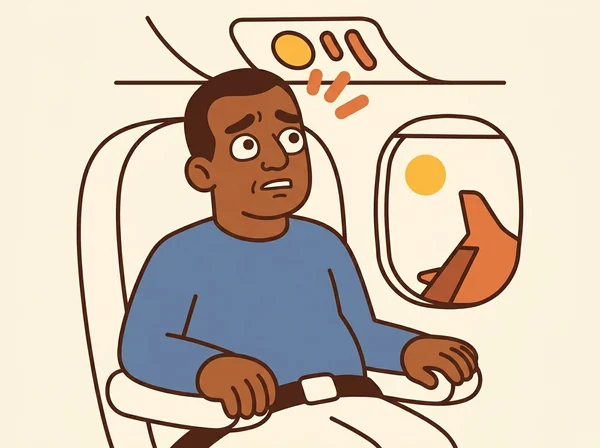
The false alarm
A dip, a chime, a change in the engine’s hum, and the body calls it danger before the thought arrives.
-
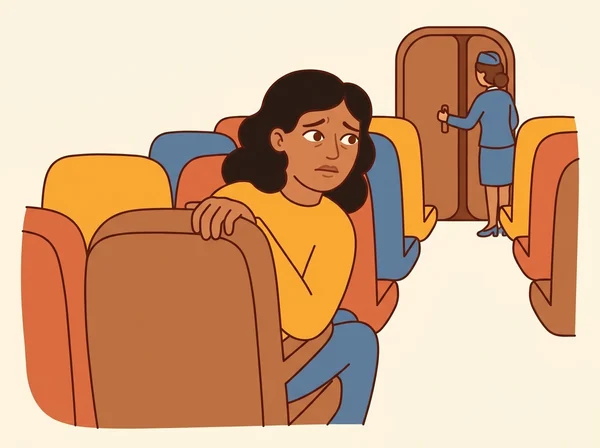
The closed door
The door seals, someone else has the controls, and the part of you that likes an exit starts counting.
-

The wave
Not what the plane will do. What the body will do, and the fear of the fear feeding itself with nowhere to put it.
-
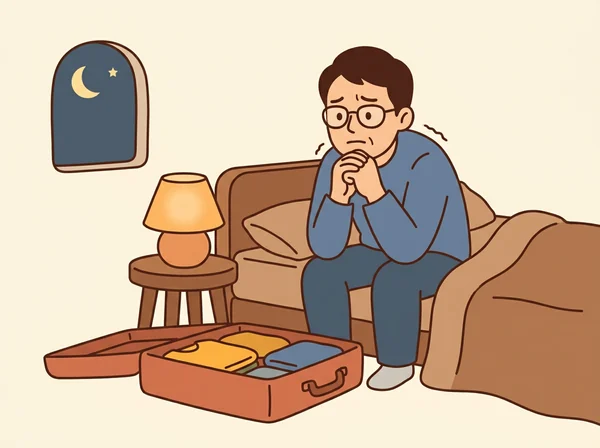
The bad feeling
Not every flight. This flight. A feeling that keeps collecting evidence and reads like a forecast.
-
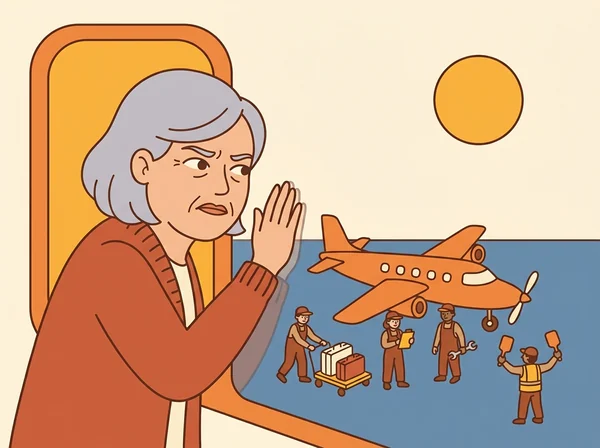
The many hands
Not the aircraft. Everyone you never see, and whether the checks got done when nobody was watching.
Swipe. Most people recognise theirs on sight
Composite illustrations, not customers. The characters are invented; the five patterns are the ones the app routes on, and the words come from thousands of people describing their own fear.
The free assessment names which pattern is yours, and from there the sessions, the sounds and the order they arrive in are keyed to that pattern. Keying to one pattern is the piece a one-size program cannot do, and the reason the earlier courses and apps did not stick.
The brain’s alarm never read the research.
The brain, drawn as a house. Three of its rooms explain why a folder of saved explanations helps for a minute and then stops.
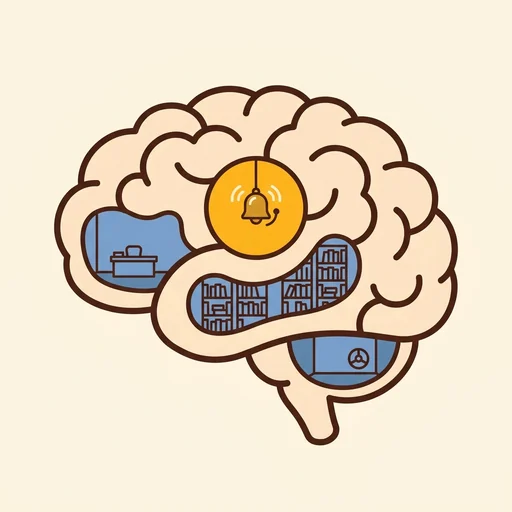 AMYGDALA · THE SMOKE ALARM
The alarm does not read
The amygdala filed flying under threat, and it does not take arguments. That is why the screenshots reread on the tarmac work right up until the cabin door thumps shut. The assessment maps when the alarm actually fires: booking, the sealed door, the first bump.
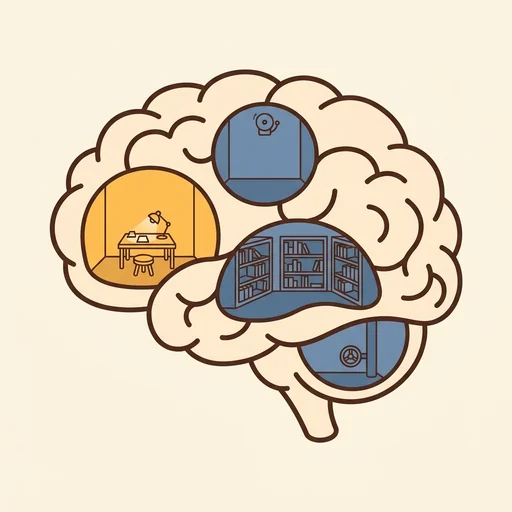 PREFRONTAL CORTEX · THE REASONING FLOOR
The right piece, not more pieces
The CBT sessions are keyed to the pattern the assessment found, so the thought being answered is the one that actually runs, not the average one. Name that thought, meet the engineering facts that answer it, write the line that boards with you.
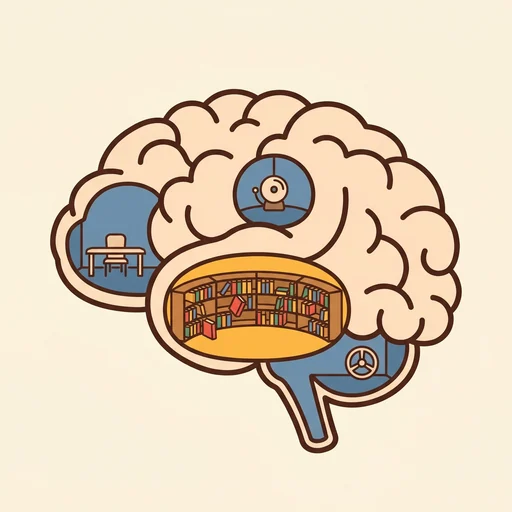 HIPPOCAMPUS · THE MEMORY LIBRARIAN
Rehearsal, not rereading
Rereading files the same evidence twice. Every calm rehearsal, the ACT audio and the graded practice, hands the memory librarian something it has not seen, and flying gets re-shelved under uncomfortable instead of dangerous.
The sessions open by taking the feeling seriously, never with odds and never with “just relax.”
Not a library. A running order.
Each door is its own session, and it knows where in the day it sits. The screenshots folder never had this part, because a folder cannot know that the wheels have left the ground.
The day's doors, shown part way through one flight day. Four are marked as already listened to, one as where you are now, and three as still ahead.
Before the airport
- At homepack, then breakfast like any Saturday
- Heading outthe drive is part of it

Inside the airport
- Securitypockets, tray, done. A queue, not a test
- Boardingyour row, your seat, your breath


In the seat
- Taxi & takeoffthe sounds you already know, in order You are here
- In the airthe long quiet middle
- Coming downdownhill now. The bumps are the road


The other side
- Landed, arrivinga door, like any other day out
Choose who flies with you.
More than 140 guided audios, in whichever voice you find more soothing.


Named things, not categories.
 The sounds, by title
Not a sound library in the abstract. The Flap Whine. The Dings. Engine Sound Changes. The Drop That Wasn’t. Flying in Weather. What the Announcements Mean. Landing Sounds, In Order. Each one explains the noise before the flight does, which is the difference between recognising a sound and interpreting it.
 Tools sized for seat 23F
For the hard minutes, sixty seconds at a time. Box breathing, 4-6-8 breathing, the five-sense scan, bilateral thumb taps under the tray table, and Trust the Chicken. Hands in your lap, nothing the stranger in 23E would notice.
 Built for airplane mode
An app that needs wifi is no help at altitude. Everything flight day needs downloads to the phone, checked file by file before you leave the ground, so the sessions, the tools and the answers are still there when the signal is not.
 The countdown, and the day itself
A few quiet minutes each evening, paced to the date on the ticket, down to the night-before session and the flight-morning audio. For a first flight in years there is a rehearsal flight, and an audio titled “Not Today — And That’s a Plan” for the day that does not happen.
 No streak to lose
Nothing here counts days at you. The lapse notifications say so in as many words, because a program that punishes a missed evening is a program you quit twice. A hard week bends the plan instead of ending it.
 The landed debrief
After the wheels are down, the debrief bottles what actually happened while it is still fresh. That is the evidence the next booking gets to read, and it is the part the screenshots folder was never going to write.
Names, so this can be checked against what is already on your phone.
What this app does not do.
A comparison worth trusting includes the parts that count against the thing being sold. So here they are, before the assessment rather than after it.
Where it falls short
- It is an iPhone app. There is no Android version yet, and no browser version. If you are on Android, this is the wrong page for you today.
- It is a subscription. 3-day free trial, then $9.99/week or $79.99/year. Apple handles the billing, and cancelling takes two taps in Settings.
- It is not a person. If the fear reaches past flying into the rest of life, this works best alongside a professional rather than instead of one. That is a real recommendation, not a disclaimer.
- It will not make you love flying. The target is boring. A flight you barely remember afterwards is the whole ambition.

We wrote the roundup too
There is a review of more than 30 apps on this site, and it hands specific jobs to other apps by name: the one that reads the phone’s sensors and explains a bump while it is happening, the free one that shows the safety numbers for a route before booking, the long-running program if budget is no object.
That review exists because the honest version of this comparison was the one nobody had published, and because someone who is a bad fit cancels within the week anyway.
Read the review of 30+ apps →Opens the blog. Prices and features there were correct at publication and the category moves quickly.

Stop comparing.
Start with which pattern is yours.
The wedding, the beach, the grandkid at arrivals: the flight is only the doorway to the part you actually booked.
Prefer to judge it from the store listing? Open ReadytoFly on the App Store ↗