


About a minute up,
the floor drops away.
The drop after takeoff is scheduled. Nobody ever told you.
The engines step back from takeoff power to climb power. The push against the seat eases off, your inner ear reads the smaller push as falling, and the aircraft is climbing through every second of it.
That is one moment. There is also the bark under the floor at pushback, the whine out in the wing before you turn onto the runway, the thunk you feel through your feet as the wheels fold away. Each one has a plain answer, and you can have it before you hear the sound.
Rather not answer questions first? Go straight to the App Store ↗
An illustration of the app open in the seat at cruise, with one sound decoder filling the screen. The explanation is playing at the top, a progress line running under it. Below sits the title, The Drop That Wasn’t, and the answer: felt in thousands of feet, measured in about twenty, because the body exaggerates motion it cannot see. A line at the end says that hearing it once adds it to the familiar set, and that this is the whole exercise.
Everything you feel up there is on purpose.
Not a pep talk. What the noise actually is, in plain language, named before it happens.
Before the wheels leave
-
Something under the floor starts barking, and the aircraft has not even moved yet.
The Bark Under the FloorIt is a pump, it lives on Airbus planes, and it barks on every flight, not just yours.
-
A long mechanical whine somewhere out in the wing, right before you turn onto the runway.
The Flap WhineThat is the flaps, and the whine is the wing gaining capability.
The first few minutes
-
The one nobody explains
The push against the seat stops, the engines go quiet, and the floor drops away underneath you.
That Sinking FeelingThe engines easing from takeoff power to climb power, exactly as planned, and the plane is still climbing the whole time. Your inner ear reads the gentler push as sinking.
The long middle
-
Two chimes, and you are already reading the cabin crew for a reaction.
The DingsThe chimes are a phone system and a couple of light switches, and none of it is code.
-
The wing dips, and your stomach reports that the aircraft fell a hundred feet.
The Drop That Wasn’tFelt in thousands of feet, measured in about twenty. Your body exaggerates motion it cannot see.
Coming down
-
Noise after noise between the top of the descent and the gate, and no way to tell which one is normal.
Landing Sounds, In OrderThe whole descent to gate sequence, in the order you will hear it.
Each one can be read on the taxiway or played in the seat, in whichever voice you find more soothing, with the wifi off. Before the sound happens, not after.
The fear was never really about the noise.
Ask people what turbulence means to them and the answer is usually not the aircraft. It is a room that cannot be left, an outcome sitting in the hands of strangers, and no way to check any of it.
Which is why the odds never helped. They were answering a question nobody was asking.
-
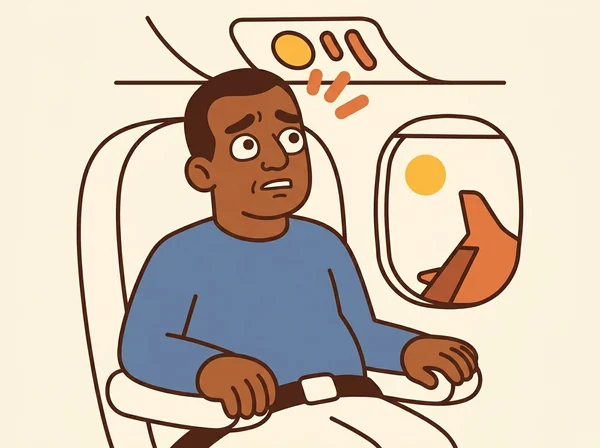
Marcus
The false alarm
“The engines ease back after takeoff and the floor goes out from under me. Two dings, and I am checking the cabin for who else heard. I know all these sounds. My body does not care.”
-
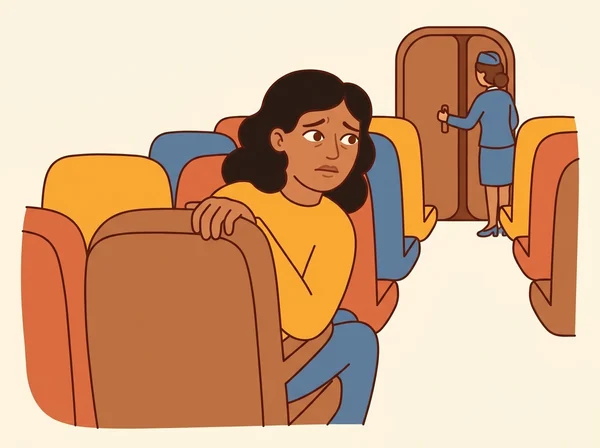
Ines
The closed door
“I am fine in the terminal. Fine on the jet bridge. Then the door seals and the cabin becomes a room I cannot leave. I start doing the arithmetic. How many hours. How many left.”
Composite voices, not customers. The names and scenes are invented, and the patterns come from thousands of posts by people describing their own fear.
There are five of these patterns, and most people recognise theirs on sight. The free assessment names which one is yours, and the app’s program is built around it.
The alarm is faster than the explanation.
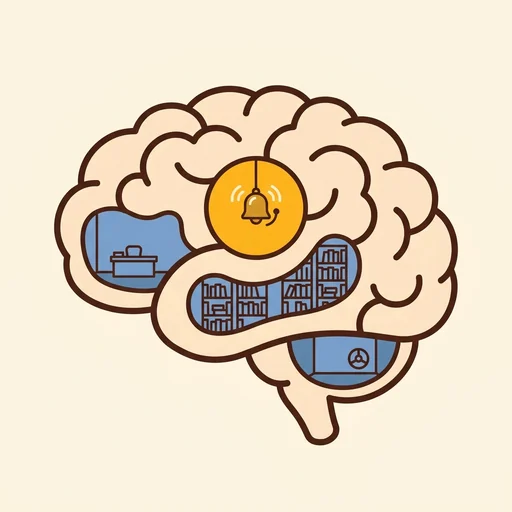
It fires before you finish the thought
The amygdala filed flying under threat a long time ago, and it fires before the part of you that already knows what the sound was can catch up. That is why reciting the numbers has never once stopped the drop in the stomach. The alarm is not in the argument.

So the answer is not a better argument
Box breathing at the app’s pace works the vagus nerve, which is the brake pedal on a heart rate. Bilateral thumb taps give the hands something to do while the heart rate comes down. Both are two taps away, and both run in airplane mode.
Hands in your lap.
Nobody in 23E notices.
 Sixty seconds, under the tray table
Bilateral thumb taps, left, right, left. Box breathing with a voice calling each side of the box, so you are not the one keeping time. The five-sense scan. Trust the Chicken when nothing else is helping. Nothing to look at, nothing to explain to anyone.
 Built for the wifi being off
Everything flight day needs is downloaded to the phone, checked file by file, before you leave the ground. At 35,000 feet the phone is a brick with your things on it, and the tools, the sound library and the answers are all still there.
 Nothing to keep up with
No streak to lose. Skip a stretch and the app does not mention it, because a notification that scolds you is a notification you turn off. You fly a few times a year, and it is built to be there on those days.
 The app does not switch off at the gate
The bit nobody warns you about is the amnesia at the jet bridge, where a flight you white knuckled becomes “that was fine” and you learn nothing for next time. The landed debrief writes down what actually happened, so the next booking has something to stand on.
Four stages of the flight-day companion, shown from the seat: taxi and takeoff marked as where you are now, then in the air, coming down, and landed.
In the seat
- Taxi & takeoffthe sounds you already know, in order You are here
- In the airthe long quiet middle
- Coming downdownhill now. The bumps are the road



The other side
- Landed, arrivinga door, like any other day out

The flight-day companion runs stage by stage across the whole day. These are the ones that matter once the cabin door is shut.
Choose who flies with you.
More than 140 guided audios, in whichever voice you find more soothing.


No odds. No “just relax.”
Every session starts by taking the feeling seriously, and only then explains it. That order is the whole method. Almost everything else does it the other way round, which is why being handed a statistic has never once made a takeoff easier.
The assessment on this site is free and it ends at the App Store. Inside the app there is a 3-day free trial, then $9.99/week or $79.99/year.

The wedding, the week off, the person standing at arrivals. The flight is only the corridor you walk to get to them.
Next time, let it be
a boring flight.
Rather not answer questions first? Go straight to the App Store ↗